FROM DATED TO DESIGNED

A Complete Guide to Planning
Your Home Remodel and Getting the Results You Envisioned

Meridian - From Dated to Designed - Hero Image (1)

BEFORE YOU BEGIN

Maybe youʼve noticed it for years. Or maybe one day it simply became impossible to ignore. The kitchen that felt fine when you moved in now feels tight the moment guests arrive. Maybe itʼs a bathroom that hasnʼt changed in decades. Rooms that were built for the way families lived thirty or forty years ago, closed off from one another when you would rather they connected. Somewhere along the way, the home you love stopped keeping up with the way you actually live in it. The house hasnʼt changed. Your life has. And eventually, the spaces that once worked begin asking for something more.

For a lot of homeowners, the feeling sharpens around other people. You put off having friends over, or you host anyway and spend the evening quietly apologizing for a room. What you want is not complicated to describe: a home that is a pleasure to live in every day, and one you are glad to open up when company comes.

Getting there is the harder part. Most homeowners arenʼt overwhelmed by construction—theyʼre overwhelmed by the decisions that come before it. Those early choices shape your budget, your timeline, and your final result, and they are not obvious from the outside. This guide walks through those decisions in plain language, so you can move forward with more confidence and fewer surprises. There is nothing to buy here and nothing being sold. The goal is simply to help you plan a remodel well. 


Download Your
Personal Copy of the eBook

Fill out the form to receive your own copy.

Meridian - From Dated to Designed - Hero Image (1)-1

Main-Pic-scaled-1

How to Know When It’s Time to Remodel Your Home 

Most remodels do not begin with a decision. They begin with living in a home that asks you to work around it instead of supporting the way you want to live—a slow accumulation of small frustrations. You work around the cramped counter, the closet that was never quite enough, the traffic jam that forms in the kitchen the moment more than two people are in it. For a while it is easier to live with it than to do something about it.

Often, it is something that finally tips the balance. A friend completes a remodel, and seeing the difference makes you look at your own home in a new way. Sometimes itʼs something breaking that forces a decision you had been putting off. Other times, there isnʼt a single event at all—just the realization that youʼve finally had enough. Some homeowners think about remodeling for years before taking the first step. Others decide over the course of a weekend. There is no right timeline —only the moment when your home no longer supports the way you want to live.

Underneath the frustration, a life event is usually the real trigger.

A new baby changes what the house needs. Teenagers make you wish they and their friends wanted to be home rather than everywhere else. Parents reach an age where they may move in. Work moves home, and a spare room has to become an office. Empty nesters trade a large house for a smaller one and want to make it their own. And more and more, people buy an older home in a neighborhood they love, with mature trees and land they could never replace, only to find the house itself was designed for how families lived in the 1970s, 80s, or 90s, not for how they live now.


Whatever the specific reason, the feeling underneath tends to be the same.

The house no longer fits daily life, and the gap between how you live and how your home works keeps widening. Kitchens, bathrooms, a primary suite that no longer meets your needs, a basement going to waste, the general flow from one room to the next: these are the spaces that create the most quiet dissatisfaction. Left alone, that feeling does not fade. It grows until the discomfort of living with it finally outweighs the discomfort of doing something about it. 

2-1

The Assumptions That Quietly Derail a Remodel

By the time most homeowners reach out, theyʼve already spent months—or even years—thinking about their project. Theyʼve gathered ideas online, talked with friends, and started forming expectations. Some of those expectations are accurate. Others are based on information that doesnʼt really apply to their home.

The most common misconception is that you can estimate a remodel from a price per square foot. Residential remodeling is not something you buy off a shelf. It is designed and custom-built into a home that already exists, with its own quirks and conditions, and your own goals layered on top. The only way to know what a project will truly cost is to design it, write a full scope of work, and price that scope. Early on, a good remodeler can give you a realistic range based on similar projects they have actually built, but a firm number comes from a plan, not a formula.


A remodel isn't priced by square footage. It's priced by the plan.

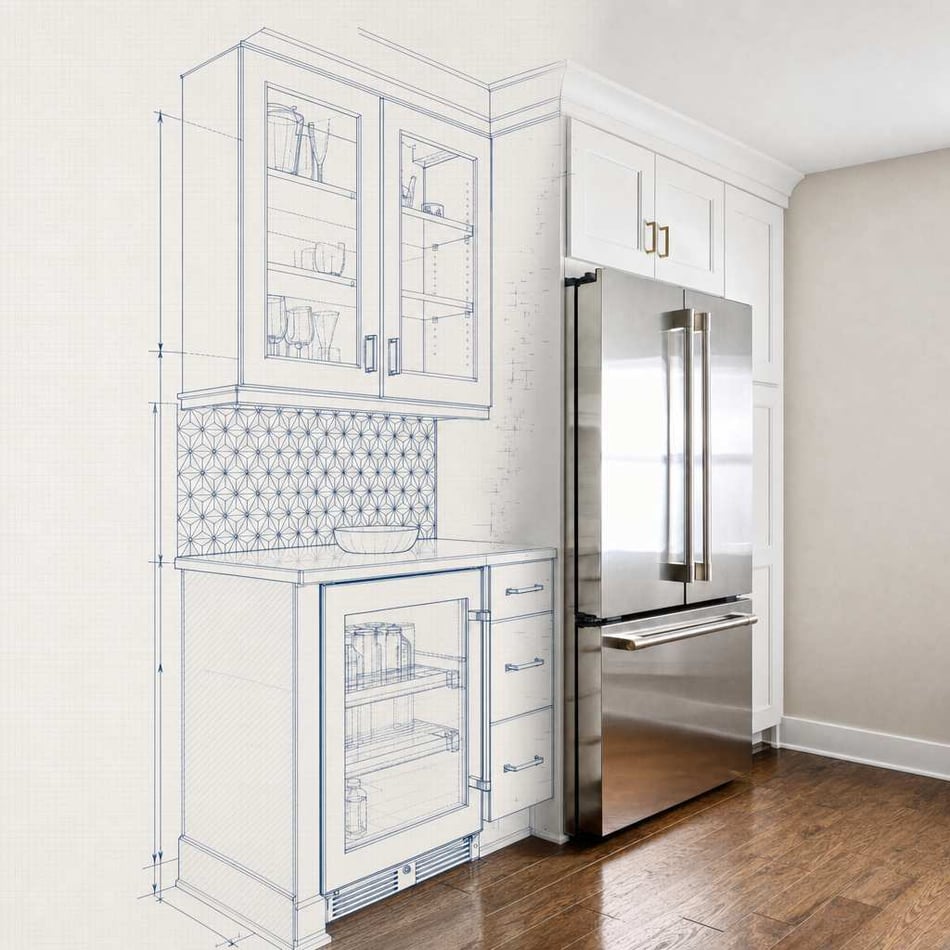
A remodel is designed and built into a home that already exists. Until someone has studied your house, drawn a plan, and written a scope of work, any price is a guess. Be cautious of a number that arrives before the plan does. 

half-drawing-half-photo-kitchen

Timelines get misjudged for a related reason. Many homeowners assume construction can start right away, when in truth you cannot build before you design, and design usually takes longer than the construction itself. Good planning also asks for something people do not expect: your time, often about an hour a week during design, spread across weeks of decisions. That investment upfront is exactly what keeps the build on schedule later.

Homes always have their own story to tell. Not every wall can simply come out, and the ones that can are rarely free to remove, because whatever load a wall was carrying has to go somewhere else. This is why studying a homeʼs existing conditions matters so much before any plan is final. It is how you find the real opportunities and steer around the expensive problems, rather than discovering them halfway through demolition.

Underneath all of these is one larger surprise: how much of a remodelʼs success is settled during design, long before a single finish is chosen. 

order-of-a-good-remodel-with-title

Download Your
Personal Copy of the eBook

Fill out the form to receive your own copy.

Meridian - From Dated to Designed - Hero Image (1)-1

Main-1024x683 (1)

Alternatives to Remodeling and When Each One Makes Sense

A major remodel is not the only way to solve the problem, and a remodeler worth trusting will tell you so. Before you commit to anything, it helps to understand the real alternatives and where each one tends to help or fall short. 

Do it yourself.

Home improvement television makes remodeling look faster and simpler than it is. The hard part is rarely the labor. It is working at scale, reading a home’s existing conditions, and planning a space the way a trained professional does. Most homeowners are not space planners, and the cost of a plan that does not work usually dwarfs the savings.

Hire a designer and a contractor separately.

This is a common path, and it can work, but it requires more coordination. When the person who designed the project is not the one building it, no single party owns the outcome. Someone has to connect the pieces. Depending on the team, that often becomes the homeowner.

Bring in a handyman.

For small fixes, a capable handyman is genuinely useful. What a handyman cannot do is solve the root issues: the layout, the flow, the way the space is planned. Without real planning and communication, you end up with fresh materials sitting on top of the same underlying problem.

Buy a different house instead.

Sometimes the smartest decision isn’t remodeling at all, and an honest remodeler will help you see that early, before you have invested in design. It is one of the first things worth weighing: does this home hold the potential to become what you want, or would that be easier to find elsewhere?

Update in place, cosmetically.

When the layout already works, and you mainly need to replace worn or dated materials, a cosmetic refresh can be the right, cost-conscious call. It stops making sense when the updates grow expensive and still leave the real problems- the cramped flow or the missing space- untouched.

Live with it, for now.

Doing nothing is always an option, and for a while it is the easiest one. The trouble is that you end up maintaining something you do not enjoy, and the frustration compounds. For many homeowners, the money spent turning a house they tolerate into one they love proves far easier to live with than the years of tolerating it.

Craftsman-Style-Garage_Blue-Bell-PA_2-Dlightbox-1024x641

Why Successful Home Remodeling Starts With Design and Planning

Everything else in this guide builds on one principle: the best remodeling decisions are made long before construction begins. A design-first approach, where the plan is fully developed before
building starts, is what separates a remodel that delivers what you pictured from one that surprises you at every turn.

Design is where you learn what your project will actually look like, what it will involve, and what it will cost, all while you can still change your mind freely. Nothing is committed, and nothing is at risk,
which makes it the right place to explore ideas, weigh trade-offs, and make decisions with real information in front of you rather than after the fact.


Scope drives cost, not materials.

Homeowners often assume the finishes are where the money goes. In reality, the scope of the work and the construction itself drive most of the cost. Materials matter, but they are rarely the biggest number. 

The floor plan—the way the space is laid out and how the rooms relate to one another—shapes daily life more than any countertop, cabinet door, or paint color ever will. You can select the most beautiful finishes available, but if the space is not planned well, they cannot rescue it. This is why the preliminary plan is the most important step in the entire process.

This is where an experienced designer brings the greatest value. Beyond drawing a plan, a good designer asks a great many questions, because after years in the same house, many homeowners have gone a little blind to both the problems and the possibilities. The right questions help you see what you had stopped noticing. And because experienced designers know where a smart material substitution or a small change in scope can save money, working with one often makes a project more cost-effective, not less.

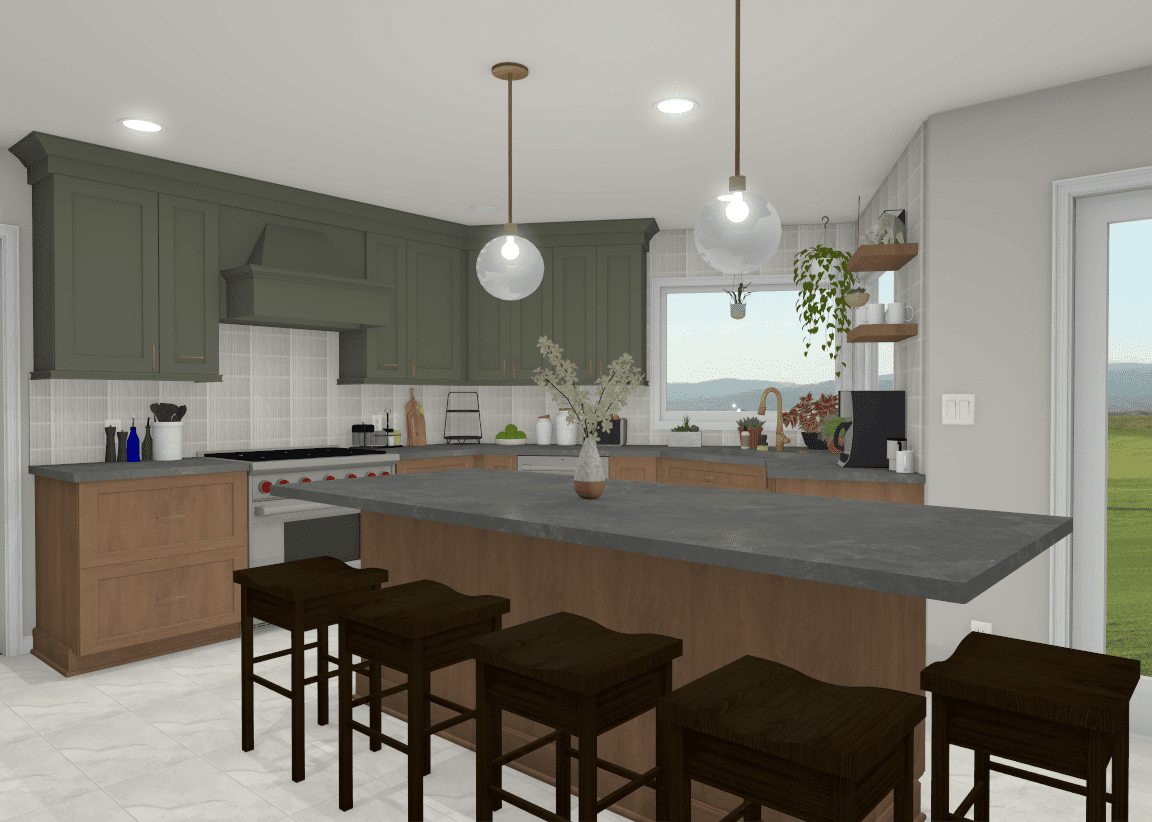
Modern tools make all of this easier to see. When a designer can lift the roof off your home with a three-dimensional model and walk you through the space before anything is built, the pinch points become obvious, and the surprises largely disappear. You are no longer trying to imagine a room from a flat drawing. You can feel how it will work, adjust it while adjusting is still free, and know what you are getting before construction starts.

None of it works without alignment at the start. The best plans begin with a simple conversation,  ideally with everyone who shares the home in the room, and an honest discussion about goals and budget. When partners agree on what they are trying to achieve and can talk openly about what they are willing to invest, the whole process runs smoother from there.

Download Your
Personal Copy of the eBook

Fill out the form to receive your own copy.

Meridian - From Dated to Designed - Hero Image (1)-1

Rendering
After-scaled (1)-1

What to Expect During Construction

Construction is disruptive. There is no honest way around that. Living in your home while it is being remodeled is inconvenient, and at times uncomfortable, no matter how well it is run. The level of activity and the noise are real, and so is the disruption to your daily routine. What good planning changes is not the discomfort itself but the surprise around it.

When a remodeler sets clear expectations at the start, tells you honestly what each week will be like, and keeps communicating as the work goes, the experience becomes something you can plan your life around instead of something that happens to you. The activity is also a sign of progress, and most weeks you can see the space moving closer to the plan you approved.

Pic-5-4-scaled-1

How to Take the Next Step

If there’s one idea to take away from this guide, it’s this: thoughtful planning creates better remodeling experiences. When the design is right, the decisions become clearer, construction becomes more predictable, and the finished home feels like it was always meant to be yours. That is the approach Meridian Construction is built around: a process-based, design-first way of remodeling that gives homeowners across Montgomery and Bucks Counties the information they need to make confident decisions.

When you are ready to see what that looks like in practice, our next guide walks through exactly what a project with Meridian is like, from the first conversation to the final walkthrough.

Talk It Through

If you would rather talk things through first, a discovery call is simply a conversation about your home, your goals, and whether weʼre the right fit for one another. Youʼll leave with a better understanding of whatʼs possible—whether you choose to move forward with Meridian or not.

You can reach us anytime at 215-362-4700, or schedule a complimentary discovery call with a member of our team whenever youʼre ready.